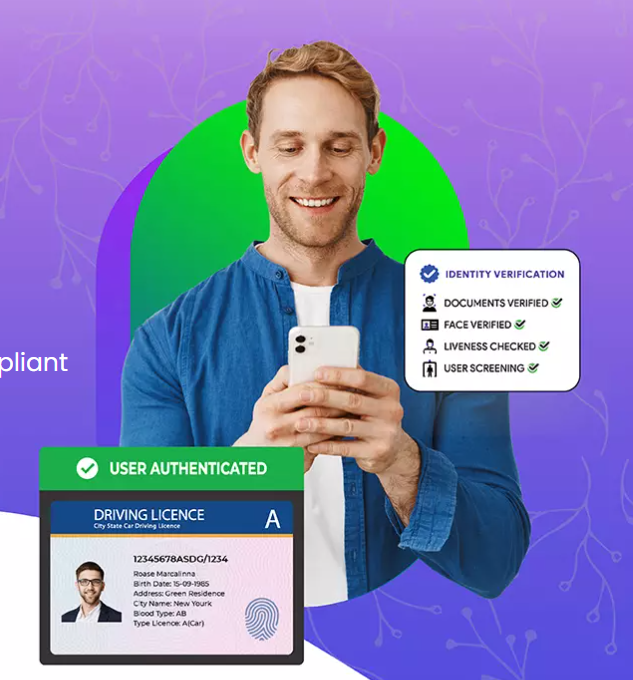
As digital services continue to expand, businesses need reliable methods to verify that users are genuine and not attempting to bypass security controls. Face liveness check and voice biometrics authentication are two advanced technologies helping organizations build stronger identity verification and authentication processes. By analyzing unique human characteristics, these solutions can improve security while supporting convenient digital experiences.
A face liveness check determines whether the person appearing in front of a camera is a real, live individual rather than a photograph, video recording, mask, or other presentation attack. It adds an important security layer to facial verification by checking signs associated with a genuine human presence.
Modern liveness technologies can analyze facial movements, depth information, lighting patterns, and other visual characteristics. This helps organizations reduce the risk of fraudulent attempts during account opening, KYC processes, financial transactions, and remote identity verification.
Voice biometrics authentication uses distinctive characteristics of a person's voice to help verify their identity. Instead of relying only on passwords, PINs, or security questions, voice-based authentication can analyze factors such as vocal characteristics, speech patterns, and other measurable features.
Voice biometrics can be useful for customer authentication, contact centers, digital banking, telecommunications, and other applications where secure and convenient identity verification is important. It can also help reduce dependence on credentials that may be forgotten, shared, or compromised.
Using face liveness check together with voice biometrics authentication can create a multi-layered approach to digital identity security. Facial analysis provides visual verification, while voice biometrics adds another biometric signal. Combining these technologies can help organizations design authentication workflows that are more resistant to certain types of fraud than relying on a single verification method.
For example, during remote onboarding, a user may complete a face liveness check before facial matching, while voice biometrics can provide an additional authentication factor for subsequent access.
These technologies can support several industries, including banking, fintech, insurance, healthcare, telecommunications, e-commerce, and digital platforms. They can be integrated into customer onboarding, account recovery, transaction authentication, employee access systems, and other identity-related workflows.
As online fraud techniques become increasingly sophisticated, businesses need identity verification solutions that balance security, usability, and scalability. Face liveness check and voice biometrics authentication provide complementary biometric capabilities that can strengthen digital identity workflows.
When implemented with appropriate privacy safeguards, encryption, consent mechanisms, and secure data handling practices, these technologies can help organizations create trusted digital experiences while reducing reliance on traditional authentication methods.

This post has been authored and published by one of our premium contributors, who are experts in their fields. They bring high-quality, well-researched content that adds significant value to our platform.