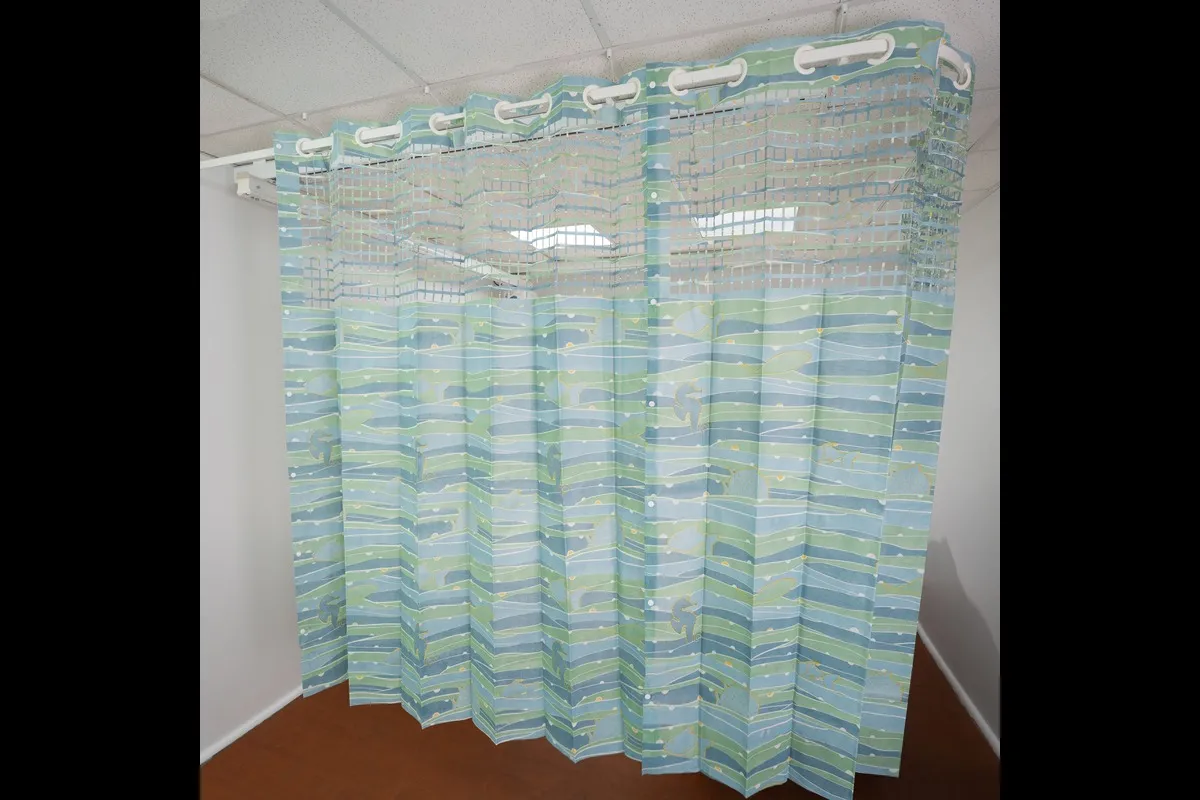
Maintaining a clean and hygienic healthcare environment is essential for patient safety, infection prevention, and efficient hospital operations. One important aspect of facility maintenance that is sometimes overlooked is Healthcare Curtain Cleaning. Hospital privacy curtains are frequently touched by patients, nurses, doctors, and other healthcare professionals, making proper cleaning and maintenance an important part of a comprehensive infection prevention programme.
At On the Right Track, we understand the importance of effective curtain management in healthcare facilities. Our innovative hospital curtain systems and maintenance resources help healthcare organisations simplify curtain changeouts while supporting cleaner, more organised patient environments.
Healthcare curtains serve an essential purpose in hospitals, clinics, and medical centres. They provide privacy, separate patient areas, and support a comfortable treatment environment.
However, because these curtains are frequently handled, they can collect dust, dirt, and microorganisms over time.
Implementing a consistent Healthcare Curtain Cleaning and maintenance programme offers several benefits:
Supports Infection Prevention: Regular cleaning and timely replacement help reduce the presence of contamination on curtain surfaces.
Improves Patient Experience: Clean, well-maintained curtains create a more welcoming healthcare environment.
Maintains Professional Standards: Proper curtain maintenance contributes to the overall cleanliness and appearance of medical facilities.
Extends Curtain Lifespan: Following manufacturer-approved washing instructions helps protect reusable curtain materials.
Improves Operational Efficiency: An organised cleaning and replacement schedule helps facility teams manage curtains more effectively.
Healthcare facilities should incorporate curtain maintenance into their established environmental cleaning and infection prevention procedures.
A structured cleaning process helps healthcare facilities maintain curtains safely and efficiently.
Hospitals should develop a curtain cleaning and replacement schedule based on their infection prevention policies, patient population, curtain material, and level of use.
High-traffic areas may require more frequent inspection and maintenance than areas with limited patient contact.
Healthcare teams should also arrange prompt cleaning or replacement whenever curtains become visibly soiled or contaminated.
Different healthcare curtain materials require different cleaning methods.
Reusable textile curtains should be washed according to the manufacturer's instructions to help preserve their appearance, structural integrity, and performance.
Important considerations include:
Recommended washing temperatures
Approved detergents and cleaning products
Suitable drying methods
Fabric compatibility
Inspection requirements after laundering
Facilities can access curtain-specific guidance through the care and maintenance resources provided by On the Right Track.
Regular inspection is an important part of hospital curtain maintenance.
Facility staff should check for:
Tears or damaged fabric
Stains and visible contamination
Broken attachment components
Excessive wear
Curtains that no longer operate smoothly
Damaged curtains should be repaired or replaced when appropriate to maintain functionality and patient privacy.
Curtain handling and removal should follow the facility's infection prevention procedures.
Staff should use the required personal protective equipment, avoid unnecessary shaking of soiled fabrics, and place used curtains into designated containers for laundering or disposal.
An efficient curtain track system can also simplify routine removal and installation, helping maintenance teams manage curtain changeouts more effectively.
Documentation helps healthcare facilities monitor curtain maintenance activities.
A practical curtain management record may include:
Curtain location and identification
Date of cleaning or replacement
Reason for curtain removal
Inspection results
Scheduled maintenance activities
Accurate records support accountability and help facility managers identify areas that require additional attention.
Hospital curtains are commonly used in patient rooms, emergency departments, examination areas, and other clinical environments.
Because healthcare workers and patients regularly come into contact with curtain surfaces, contaminated curtains may contribute to the transfer of microorganisms through touch.
Effective cleaning and curtain replacement procedures can help reduce this risk as part of a broader infection prevention strategy.
However, curtain cleaning should complement other essential precautions, including hand hygiene, environmental surface disinfection, and facility-specific infection control protocols.
A well-managed curtain maintenance programme supports consistent hygiene practices across healthcare environments.
Healthcare facilities can choose different curtain solutions depending on operational requirements, sustainability goals, and maintenance capabilities.
Reusable textile curtains are designed for repeated use and laundering.
Their advantages include:
Long-term use when properly maintained
Multiple fabric and design options
Suitability for established laundry programmes
Potential reduction in single-use material consumption
Facilities must follow appropriate laundering procedures and inspect curtains regularly to maintain their condition.
Disposable curtains offer another option for healthcare facilities seeking to simplify curtain replacement.
Their potential benefits include:
Eliminating laundering requirements for the curtain itself
Simplifying replacement workflows
Reducing handling associated with transporting used curtains to laundry
Supporting consistent curtain changeout procedures
Disposable curtains should be replaced according to facility policy and disposed of or recycled according to the product's specifications and available recycling programmes.
Selecting the appropriate solution depends on the healthcare facility's individual needs.
Even well-established medical facilities can encounter challenges when managing hospital curtains.
Some common mistakes include:
Ignoring Manufacturer Guidelines
Using unsuitable washing temperatures or cleaning products can damage curtain materials and affect their performance.
Delaying Curtain Replacement
Allowing visibly contaminated or damaged curtains to remain in use can create unnecessary hygiene concerns.
Using Inconsistent Cleaning Schedules
Without a documented maintenance programme, healthcare teams may overlook curtain inspections and replacements.
Overlooking Curtain Tracks
Curtain tracks and attachment components also require inspection and appropriate maintenance to support smooth operation.
Failing to Train Maintenance Staff
Healthcare personnel responsible for curtain handling should understand approved cleaning, removal, storage, and replacement procedures.
Avoiding these mistakes supports a more organised healthcare curtain management system.
On the Right Track provides innovative hospital curtain systems designed to improve curtain management and operational efficiency in healthcare facilities.
The company offers solutions including:
Hookless Curtain Track Systems: Designed to simplify curtain removal and replacement without traditional curtain hooks.
Hospital Privacy Curtains: Textile and disposable curtain options for clinical environments.
Hospital Shower Curtains: Curtain solutions designed for healthcare shower areas.
Curtain Changeout Services: Support for organised curtain replacement and facility maintenance.
Care and Maintenance Resources: Product-specific instructions for maintaining compatible textile and shower curtains.
By combining practical curtain systems with accessible maintenance information, On the Right Track helps healthcare teams manage privacy curtains more efficiently.
Cleaning frequency depends on facility infection prevention policies, curtain material, patient care setting, and contamination risk. Curtains should also be cleaned or replaced promptly when visibly soiled or otherwise required by facility protocols.
Many reusable textile hospital curtains can be machine-washed. However, healthcare facilities should always follow the manufacturer's specific laundering instructions.
Proper curtain maintenance supports hygiene, patient privacy, curtain functionality, and efficient healthcare facility operations.
Both options have advantages. Reusable curtains may suit facilities with established laundering systems, while disposable curtains can simplify replacement and eliminate curtain laundering requirements.
On the Right Track provides washing guidance for its textile cubicle curtains and hookless shower curtains through its care and maintenance resources.
Effective Healthcare Curtain Cleaning plays an important role in maintaining hygienic, organised, and patient-friendly healthcare environments.
By following manufacturer-approved washing instructions, conducting regular inspections, maintaining accurate records, and establishing clear replacement procedures, healthcare facilities can improve curtain management and support their infection prevention programmes.
On the Right Track offers innovative curtain systems and maintenance resources to help hospitals and medical facilities simplify curtain care and replacement.
Explore our Healthcare Curtain Cleaning resources to learn more about proper curtain care and maintenance.
Visit On the Right Track to discover our hospital curtain products and healthcare facility solutions.

This post has been authored and published by one of our premium contributors, who are experts in their fields. They bring high-quality, well-researched content that adds significant value to our platform.